When is hand piling used? A guide to restricted-access foundation projects
Hand piling is used where conventional piling rigs cannot safely or practically access the required work area. It provides a way to construct engineered pile foundations in restricted locations, but it is not simply a smaller version of rig piling. The methodology must be developed around the pile design, ground conditions, excavation process, material handling and safe access.
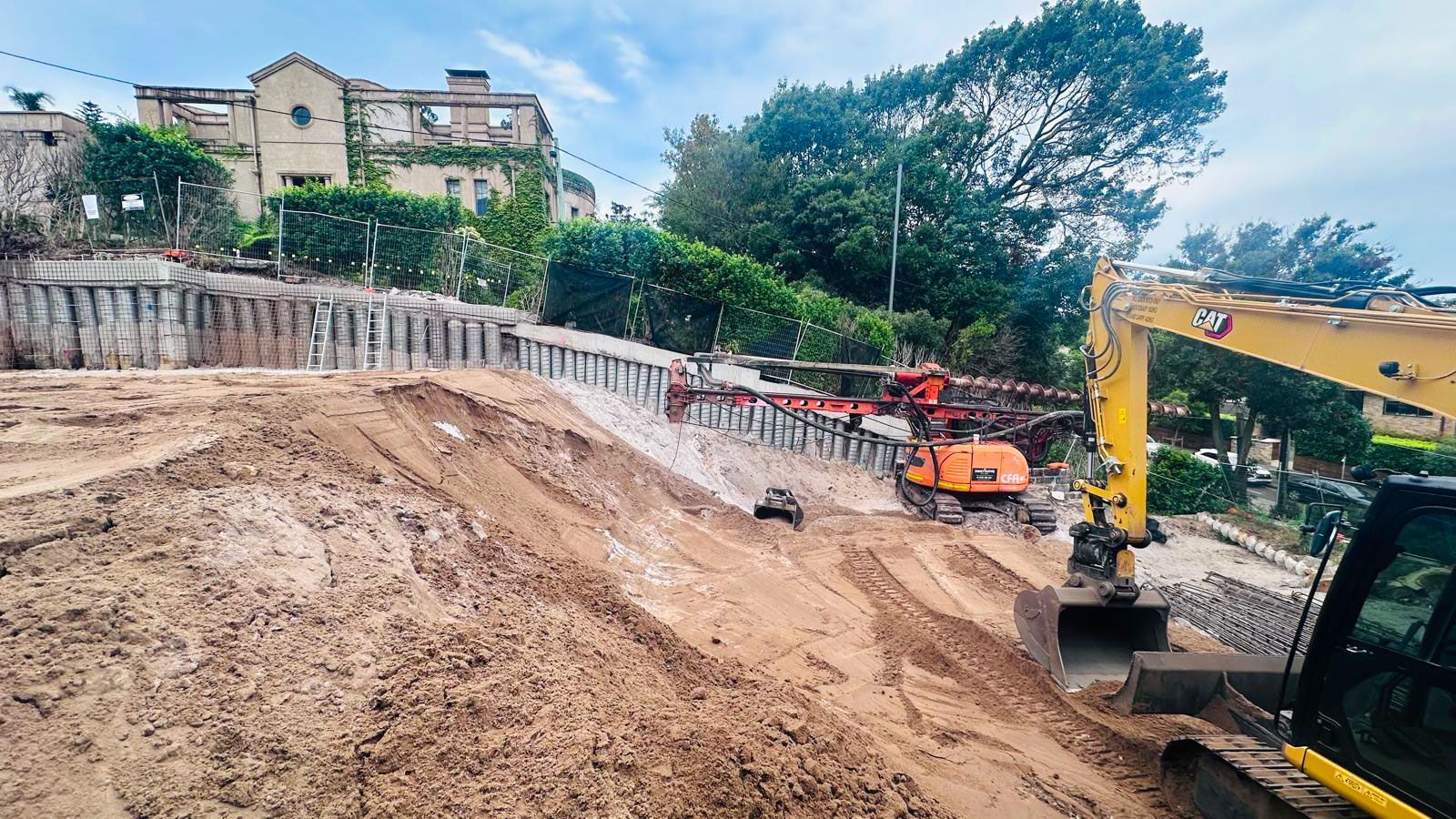
Restricted-access work can occur on residential, commercial and civil sites. The defining issue is not the project category; it is whether the specified foundation can be delivered within the physical constraints of the site.
What makes a site restricted access?
A site may be considered restricted when entry widths, overhead clearance, slopes, existing buildings or limited operating space prevent a conventional piling rig from reaching the pile locations. The route from the street to the work area can be just as important as the space around the pile itself.
Common constraints may include narrow side access, work behind or between structures, low headroom, internal areas and sites with limited room for turning or material storage. Each location requires its own assessment.
How does hand piling work?
Hand piling uses manual techniques and smaller equipment to excavate and construct piles in areas inaccessible to full-scale rigs. The precise process depends on the engineering design and ground conditions.
Excavated material must be removed from the bore and transported out of the work area. Reinforcement and concrete must move through the same restricted route. The method therefore needs to address the complete material flow, not only the excavation itself.
When might hand piling be considered?
Hand piling may be considered when the required pile locations cannot be reached by suitable mechanical piling equipment and the foundation design can be constructed through an approved restricted-access methodology. It may support new foundations, alterations, underpinning-related works or other engineered scopes, depending on the project design.
The method is not chosen solely because access is narrow. The ground profile, groundwater, pile dimensions, depth, ventilation, spoil handling and safe-work requirements must all be assessed.
Is hand piling always simpler or less expensive?
No. Smaller equipment does not automatically mean a simpler project. Restricted access can make excavation, spoil removal, reinforcement handling and concrete placement more labour intensive. Productivity may differ from rig-based methods, and site controls can be more involved.
A meaningful comparison should consider the whole scope: mobilisation, access preparation, installation, materials, spoil, associated excavation and coordination with the wider foundation works.
What ground conditions affect restricted-access piling?
Soil stability, rock, fill and groundwater influence how excavation can proceed and what controls may be required. The available geotechnical information helps the project team anticipate those conditions, but the methodology must also allow for monitoring during the work.
If the encountered material differs from expectations, the contractor, builder and engineer need a clear process for reviewing the conditions and confirming the next step.
How should materials and spoil be planned?
Restricted access often creates a shared route for workers, equipment, spoil, reinforcement and concrete. Without careful sequencing, these movements can interfere with each other and the wider construction program.
- Identify how excavated material will leave the work area.
- Confirm where spoil can be stored before removal.
- Plan reinforcement dimensions and the route to each pile.
- Coordinate concrete delivery and placement.
- Keep safe access and emergency routes available.
- Allow for adjacent excavation and foundation activities.
What information helps assess a hand piling project?
Provide the pile design, structural drawings, geotechnical information and proposed program. Access measurements and photographs should show the full route, including gates, corridors, steps, slopes, headroom and the final working area.
Details of existing structures, services and planned excavation help the contractor understand how the piling work fits into the broader project.
Integrated planning for restricted-access foundations
C to C Group delivers integrated piling solutions from tight-access hand piling to full-scale rig works. Drawing on established foundation-industry experience, we work closely with builders, developers and engineers to provide tailored solutions, clear communication and consistent results.
To discuss a restricted-access site, send our team the available plans, ground information and photographs of the access route.