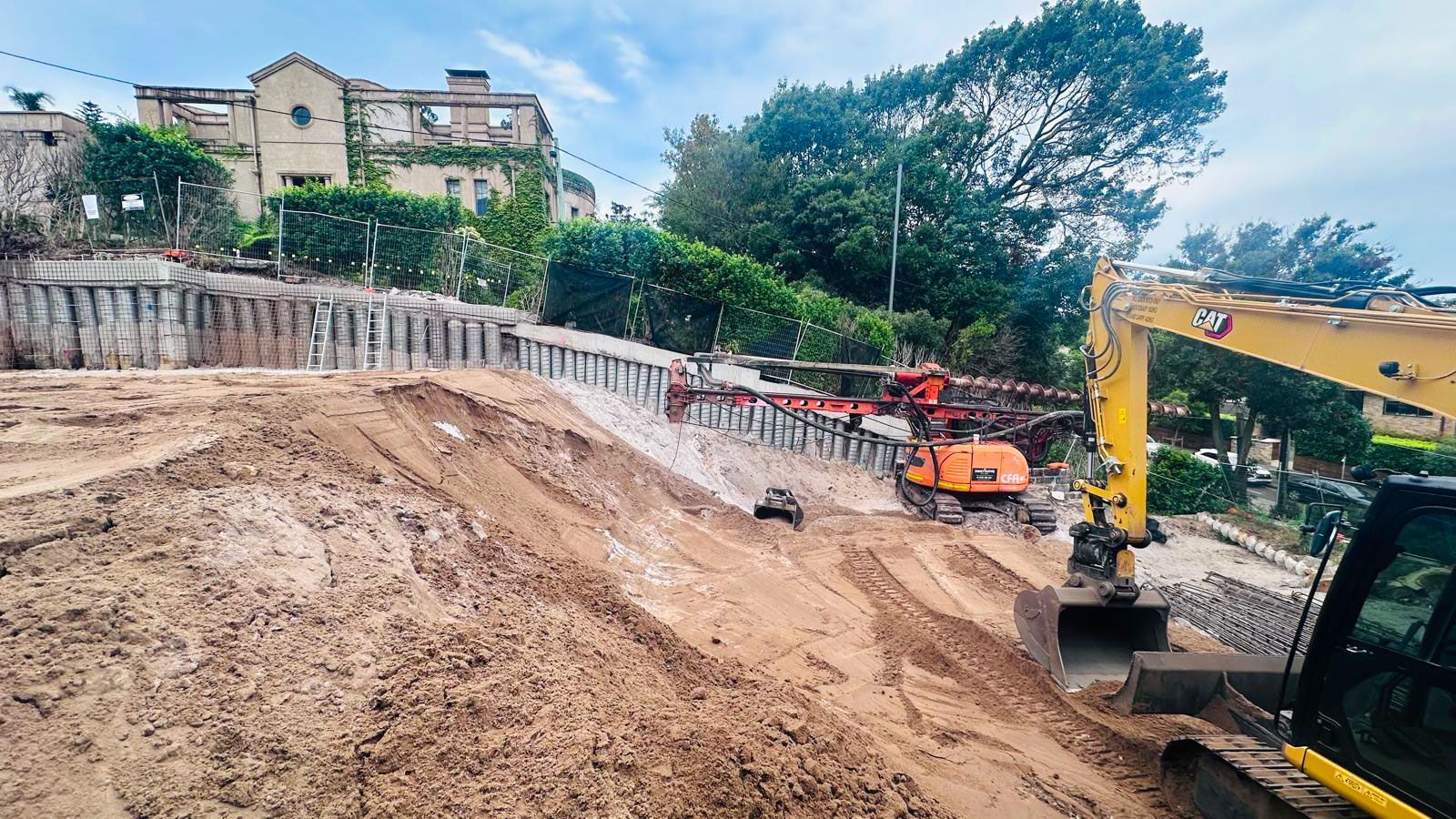
What are bored piles and bored piers? Installation, applications and site considerations
Bored piles are cast-in-place foundation elements formed by drilling a shaft into the ground before installing reinforcement and concrete. The term “bored pier” is also commonly used in Australian construction, particularly for drilled concrete foundation elements. The terminology used on a project should follow the engineering documents, but both expressions generally describe a foundation created by boring rather than driving a prefabricated pile into the ground.
Bored piling can be adapted to different structural, ground and construction requirements. The appropriate diameter, depth, reinforcement and installation method must be determined through engineering design and coordinated with the conditions found on site.
How are bored piles constructed?
The construction sequence depends on the design and ground conditions, but a bored pile is generally installed through a controlled series of stages:
- The pile location is set out from the approved design.
- A piling rig drills the shaft to the required diameter and depth.
- Excavated material is removed and managed within the site logistics plan.
- The bore is prepared and checked in accordance with the project requirements.
- Reinforcement is installed as detailed by the engineer.
- Concrete is placed using the method required for the conditions and specification.
- Records and any required testing are completed under the project quality process.
This sequence may need to change where groundwater, unstable soils, rock, restricted access or other site conditions affect the stability and construction of the bore.
Are bored piles and bored piers the same?
“Bored pile” and “bored pier” are often used for similar drilled, cast-in-place foundation elements, but terminology can vary between engineers, projects and parts of the construction industry. Rather than relying on the name alone, project teams should confirm the specified diameter, depth, reinforcement, load requirements and installation methodology.
The engineering documents remain the source of truth. A piling contractor’s role is to review those requirements alongside the geotechnical information and practical site constraints.
When might bored piling be considered?
Bored piling may be specified where a project requires a deeper or larger foundation element, substantial structural support or a system that can be adapted to the encountered ground profile. It can also form part of engineered retaining and foundation works.
Suitability depends on more than load capacity. The available rig access, working platform, spoil handling, concrete delivery, reinforcement logistics and surrounding structures all influence whether the proposed method can be delivered effectively.
What ground conditions affect bored piling?
The soil and rock profile influences drilling progress, bore stability and the equipment or supporting methodology that may be required. Groundwater can also affect how the bore is maintained and concreted. A geotechnical investigation helps the engineer and contractor understand the expected sequence of materials below the surface, but actual conditions should still be monitored during construction.
Where loose, unstable or water-bearing materials are present, the project methodology may need additional controls. Those requirements should be considered before mobilisation rather than treated as an unexpected detail once drilling starts.
What site-access information is important?
A piling rig must be able to reach and operate within the work area. Access planning should consider:
- Gateways, driveways and entry widths.
- Overhead restrictions, services and nearby structures.
- Slopes, turning areas and changes in ground level.
- The capacity and condition of the working platform.
- Space for spoil, reinforcement and concrete delivery.
- Coordination with excavation and other construction activities.
A site that appears open on a plan may still contain practical restrictions. Photographs, levels and an accurate access route help the project team assess those constraints early.
How do bored piles compare with CFA piles?
Bored and CFA piles are both constructed in the ground, but their installation sequences differ. A bored pile is drilled as an open shaft before reinforcement and concrete placement. A CFA pile is drilled with a continuous hollow-stem auger, with concrete pumped as the auger is withdrawn.
The choice is not based on one method being universally better. It depends on the engineering design, pile dimensions, ground conditions, access, environmental considerations and required productivity.
Information to provide for a bored piling enquiry
Useful information includes the structural and piling drawings, geotechnical report, pile schedule, project address, access details, proposed program and any known underground or overhead constraints. Details of related excavation or foundation works can also help the team understand the broader sequence.
C to C Group works with builders, developers and engineers on heavier, deeper and more demanding foundation systems. To discuss the constructability of a proposed bored piling scope, send our team the available project information.