How do CFA piles work? Continuous flight auger piling explained
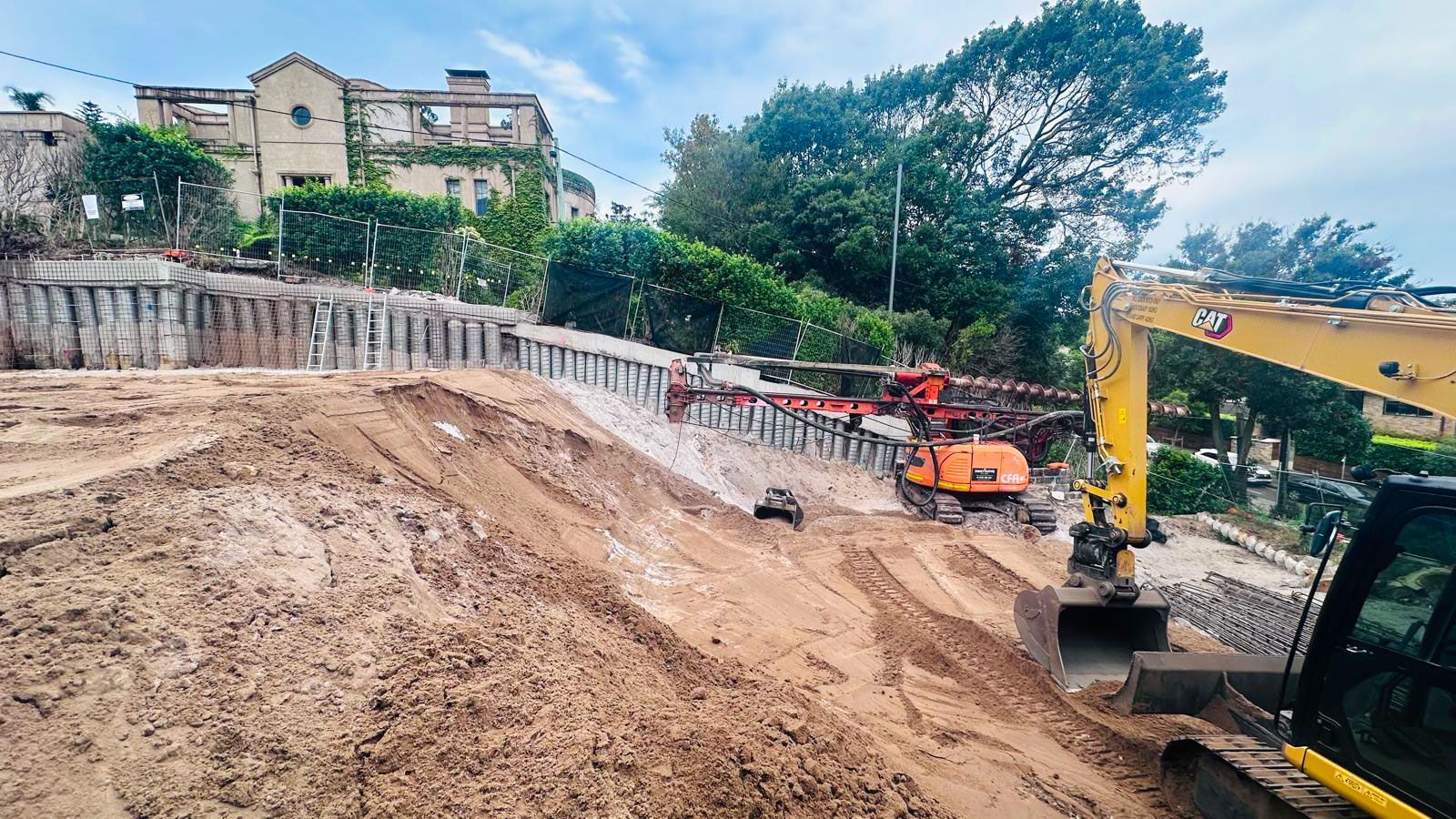
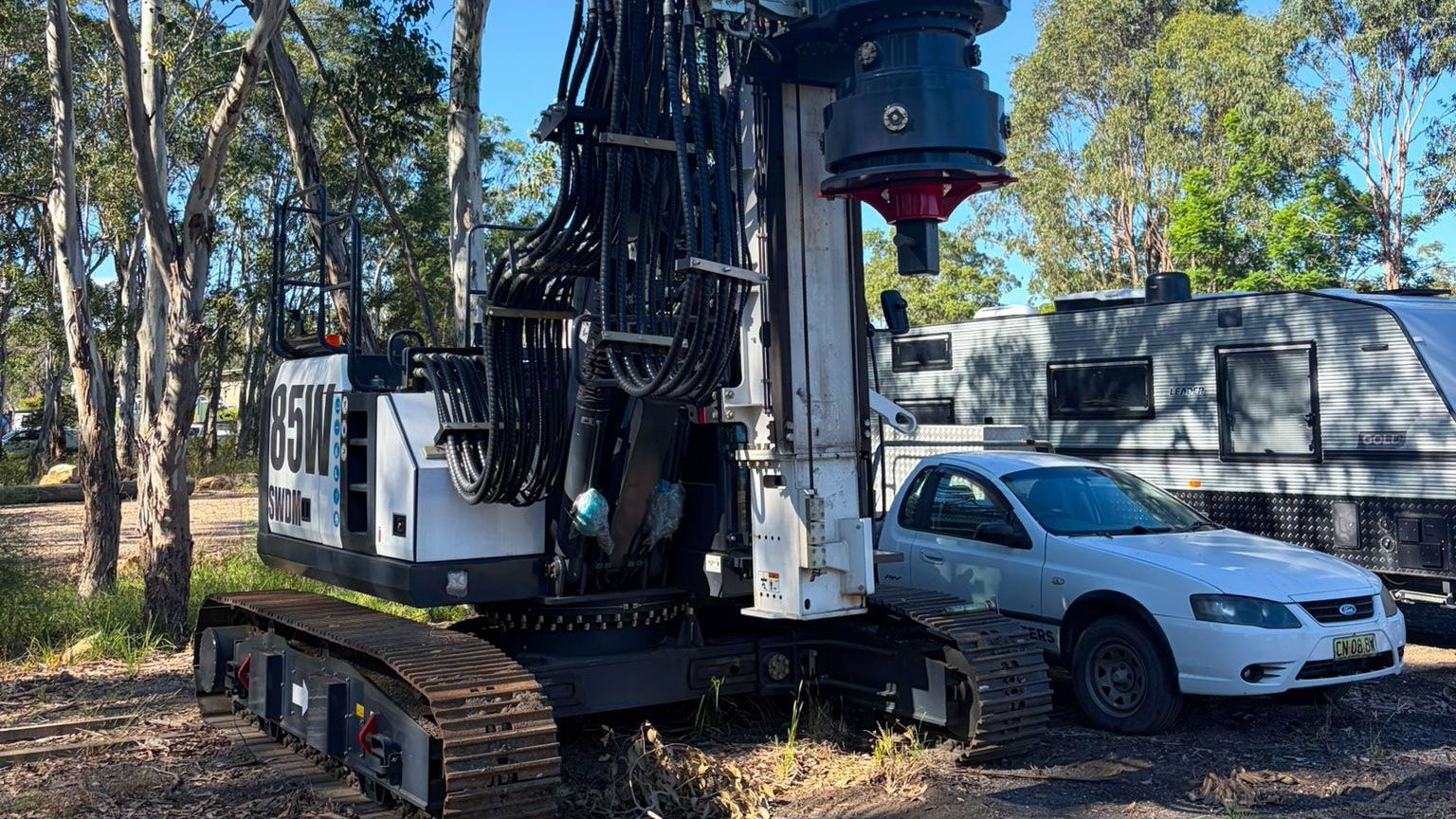
CFA stands for continuous flight auger. CFA piling uses a hollow-stem auger to drill to the required depth, after which concrete is pumped through the auger as it is progressively withdrawn. Reinforcement is then installed in accordance with the engineering design.
The method combines drilling and concrete placement into a continuous sequence. That sequence is one reason CFA piles are considered for projects requiring productive installation, controlled concrete placement and lower vibration than driven piling methods. Suitability still depends on the design, ground profile, rig access and construction logistics.
What happens during CFA pile installation?
A typical CFA piling sequence includes the following stages:
- The pile locations are set out from the approved plans.
- The piling rig positions the continuous flight auger over the pile location.
- The auger drills to the specified depth while retaining the excavated material on its flights.
- Concrete is pumped through the hollow stem as the auger is withdrawn.
- The reinforcement cage or bar is installed into the fresh concrete as required by the design.
- Installation records and specified quality checks are completed.
Coordination throughout the sequence is important. Drilling rate, concrete supply, extraction and reinforcement installation all need to align with the approved methodology and actual ground response.
Why is it called a continuous flight auger?
The auger has continuous helical flights along its length. These flights carry soil upward during drilling while also supporting the sides of the bore. Because the auger remains in the ground until concrete placement begins, the process differs from an open bored-pile excavation.
The correct auger, rig and operating sequence are selected around the pile design and expected ground conditions. The name describes the equipment and method; it does not replace the need for project-specific engineering.
When may CFA piling be suitable?
CFA piles may be considered for commercial, civil and other projects where the design calls for cast-in-place piles and the site can accommodate the required rig, working platform and concrete operations. The method can be well suited to repeated pile installation where a consistent sequence supports the project program.
It may also be considered where vibration is an important constraint. However, nearby structures, services, noise requirements and the wider construction environment should still be reviewed as part of the project methodology.
What conditions influence CFA piling?
The ground profile affects drilling resistance, achievable production and the behaviour of the bore during concrete placement. The geotechnical information should identify the expected soil and rock layers, groundwater conditions and depth of competent material. The structural design then defines the pile requirements that the installation must achieve.
Site conditions are equally significant. Rig selection and mobilisation depend on entry width, overhead clearance, turning space, slopes and the available working area. Concrete trucks, reinforcement and spoil handling must also be coordinated without interrupting the pile sequence.
What are the practical benefits of CFA piling?
Where it is technically and practically suitable, CFA piling can provide several project benefits:
- A continuous drilling and concreting sequence.
- Efficient installation across repeated pile locations.
- Reduced vibration compared with driven installation methods.
- Controlled concrete delivery through the hollow-stem auger.
- Compatibility with a range of commercial and civil foundation requirements.
These are general method characteristics, not guarantees for every site. Ground conditions, pile design, access and project coordination determine the actual outcome.
What information should be available before mobilisation?
Early planning should bring together the piling layout, pile schedule, structural details, geotechnical report and proposed construction program. The contractor also needs clear information about the route into the site, working-platform conditions, overhead and underground services, concrete access and spoil-management arrangements.
Resolving these matters before the rig arrives supports a more organised installation sequence and reduces avoidable disruption.
Is CFA piling the right method for every project?
No. CFA piling is one of several foundation methods. A project may instead require bored piling, hand piling or another engineered approach depending on the loads, depth, access and ground conditions.
C to C Group delivers integrated piling solutions from restricted-access works to full-scale rig operations. If your plans specify CFA piles or you are assessing the constructability of a foundation design, contact our team with the available engineering and site information.